
North Europe
Vote for the young chef who best represents her or his personal beliefs with a dish.
Here you will find the signature dish and the answer to the question: “What message, history and identity would you like to convey through this dish?” submitted by each regional finalist.
Happy voting!

My name is Astrid Snövit Wahlen, I am 24 years old and I am passionate about nature, the earth and cooking. I believe that we only borrow nature's resources and therefore must use them with respect. That is why I chose to work with carrots and wild duck – raw materials with a low climate impact. A sustainable future begins in the soil, where healthy ecosystems create the conditions for food production. Through conscious choices, we can preserve Sweden's nature


Emmanuel Pillon chef of the Louis XV said : « Nothing is lost, everything is transformed. » In my dishes I would like to transmet this kind of spirit. We can use all the left over, all the skin and make a really good dishes. I choose to cook vegan become since 8 months I grow in this environnement and I found a really équilibre of technic and flavor. This kitchen let me really grow and open many doors for fermentations and taste.

With this dish, I want to show that it is possible to create a restaurant-quality dish using everyday ingredients, and that it can be used in many different ways. My goal was to prove that great cooking is not about luxury ingredients, but about technique, creativity, and making the most of what is available.

This dish reflects both me as a chef and as a person. The lamb comes from my cousin’s farm in Dalarna, where I helped as a child, giving the dish a strong personal connection. The lingonberries were handpicked by me in the forests of Dalarna. My philosophy is to support small Swedish producers who prioritize sustainability, animal welfare. And also highlight the Swedish ingredients. I also believe in using every part of an ingredient, ensuring minimal waste and maximum respect for the produce.

In the modern world people get exposed to a huge number of ideas and opinions every day. The purpose of my dish is not to educate a person or try to put a new idea in his head, but simply bring joy and awaken positive emotions. I want to try and give joy to people by creating delicious food from good quality ingredients. If I can make someone feel good with my dish, I can contribute to making the world a better place and that is the most important for me. Delicious food is inspiring in itself.

We are taught that sacrifice is the only way to perfection, that the expense of people is a normal part of being a chef. That the best produce is from the other part of the world and that waste is an exception for fine dining. I believe that sustainability contains so much more than just local vegetables. Its also about leadership, a good working environment and treating ourselves with respect. Respect the people, respect the produce, respect the process. Respect the world.

I am a chef driven by curiosity, and respect for ingredients. Today, I shape my identity through Nordic flavors and technical performance. In the future, I aim to become a chef who unites craftsmanship and sustainable, creates experiences that move people, and contributes to pushing gastronomy forward.

Cooking connects me to the women in my family who passed down traditions through observation and practice. This dish celebrates that heritage using Irish Dexter beef, barley, whiskey, peat, oats and carrots. Inspired by memories of family, farming and visits to the local bog with my father, it reflects Ireland’s landscape, resilience and food culture. Through modern techniques, I reinterpret familiar flavours while honouring the stories, people and traditions that shaped them.

I want to share Norwegian food culture through local ingredients. Growing up with hunting, fishing, and foraging taught me the value of nature and honest food. In a world focused on ultra processed food and sugar, I want to highlight local and organic ingredients with real flavour and identity. This dish reflects who I am as a chef and hunter, using deer, mushrooms and lingonberries to show what nature can give us.

I believe the most honest cooking is an act of memory. This dish lives in my grandmother's quintal in Curitiba, a garden that grew everything we needed. No protein at the centre, just herbs, fruits, and vegetables. I am a chef shaped not by culinary degree, but by proximity, repetition, and the daily act of being fed by someone who loved me.

Cod on a Journey reflects my path as a chef. Rooted in Slovenian tradition yet driven by curiosity, I explore new cultures, techniques, and cuisines while respecting ingredients in their entirety. My dish is influenced by my belief in a head-to-tail approach. Through Slovenia, my heritage, Japan and Spain, a wish for my future, and Denmark, my present, I showcase every part of the cod, a dish that celebrates heritage, learning, and the journey that continues to shape me as a cook.

Living on the Swedish west coast of course I love to work with anything from the sea next to me, something that is getting harder to do! The amount of fish in the sea is decreasing due to overfishing and the sea environment is getting destroyed due to questionable fishing methods. With my dish i like to showcase the fantastic and sustainable produce that we have in form of halibut farmed by sterling and cagecaught langoustine and how to enhance them with flavours from all around the world.
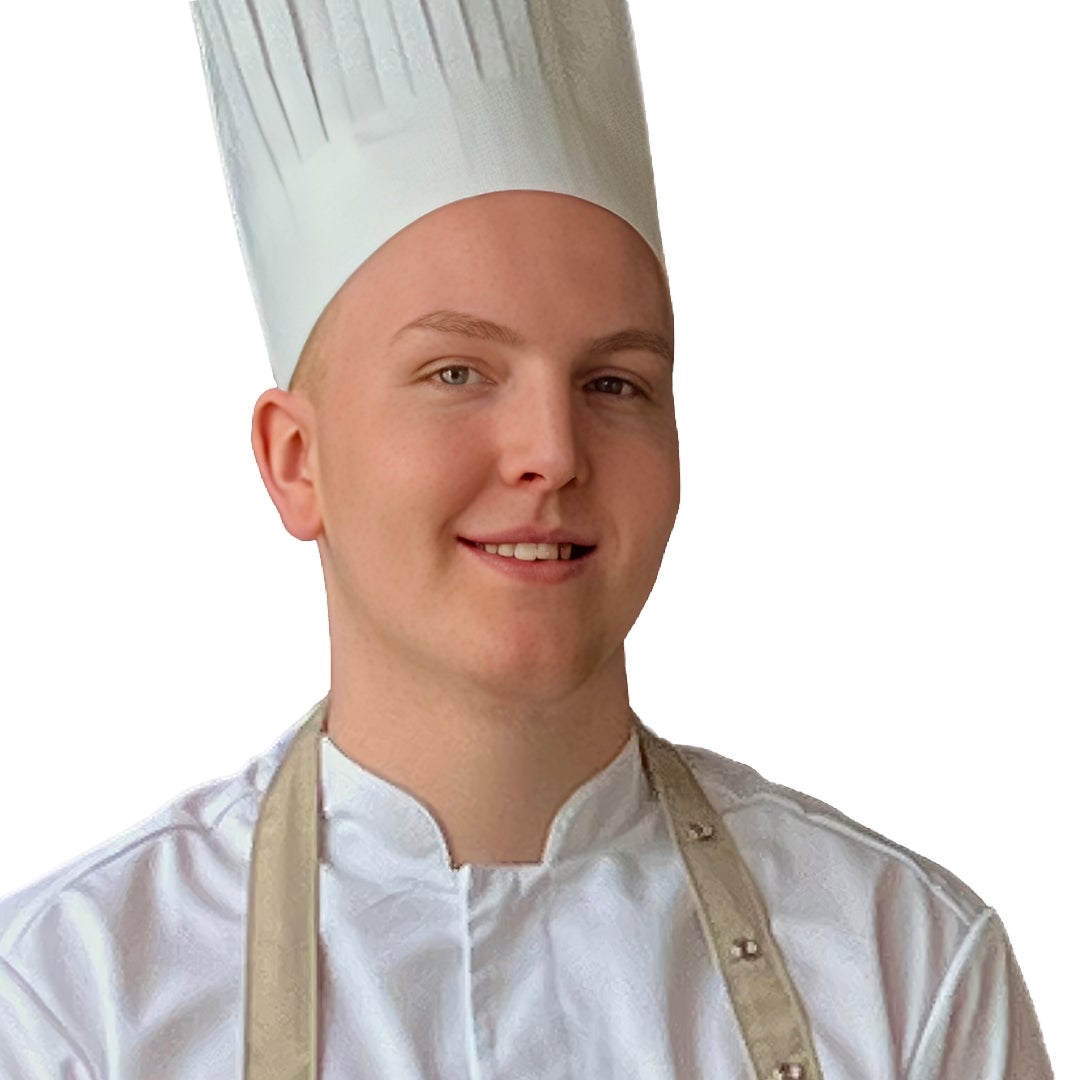

The Silent Flock – A Life Through Lamb explores the life cycle of a sheep as a reflection of Ireland’s journey across generations. Lamb, hogget and mutton represent youth, growth and maturity, mirroring my grandfather’s generation of necessity, my father’s generation of change, and my own generation of opportunity. Rooted in whole-animal cookery and the Irish landscape, it honors the past while looking confidently toward the future of Irish cuisine.
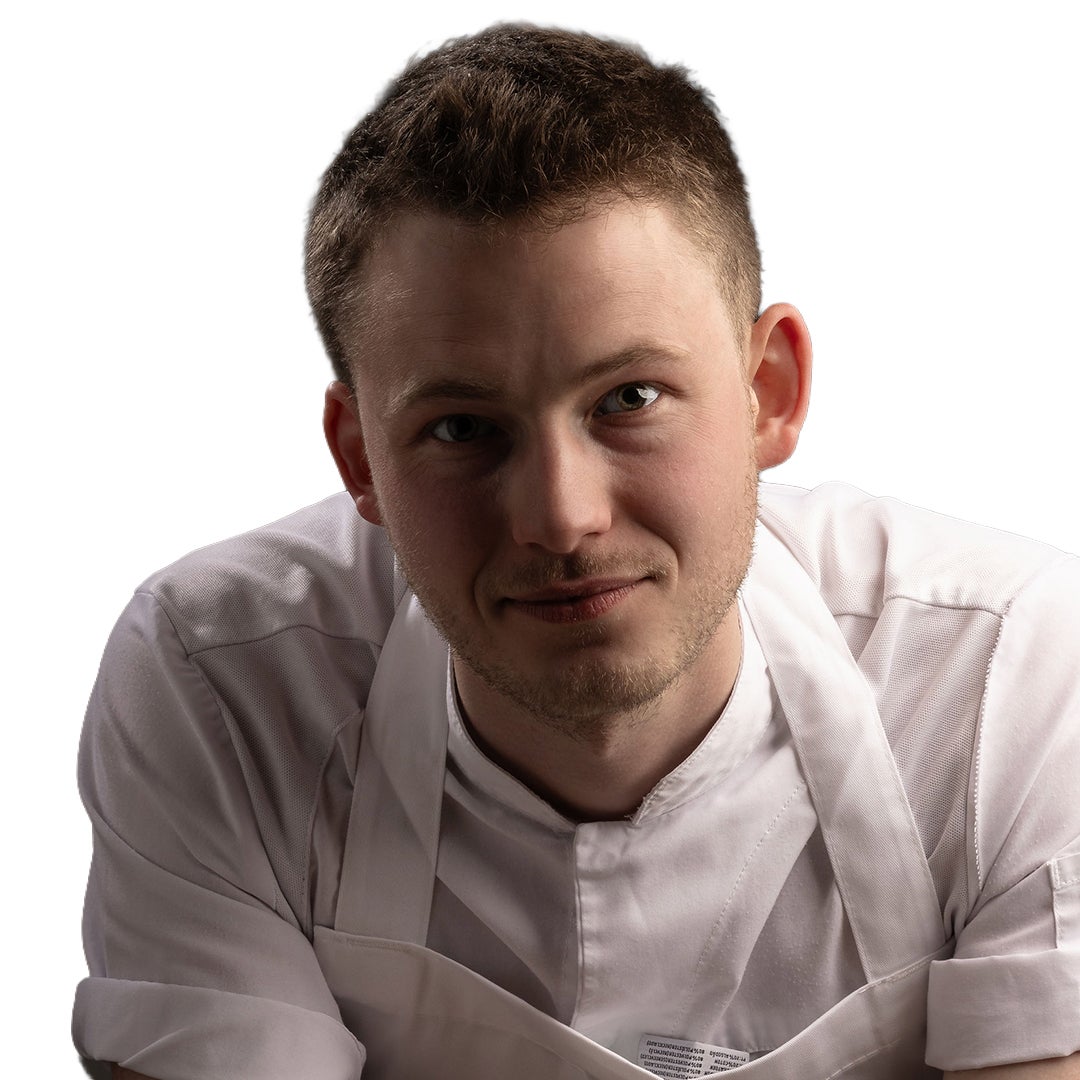

Inspired by the warm flavours of a traditional Bulgarian clay pot feast, this dish is rooted in the memories and traditions that raised me. Preserved ingredients, walnuts, peppers, and the spirit of the family table stand at its core, while Dutch quail takes its place as the centrepiece. By combining the flavours of my childhood with influences gathered along my journey, it feels both familiar and unexpected. It honours my heritage, showing how food can carry memory forward.
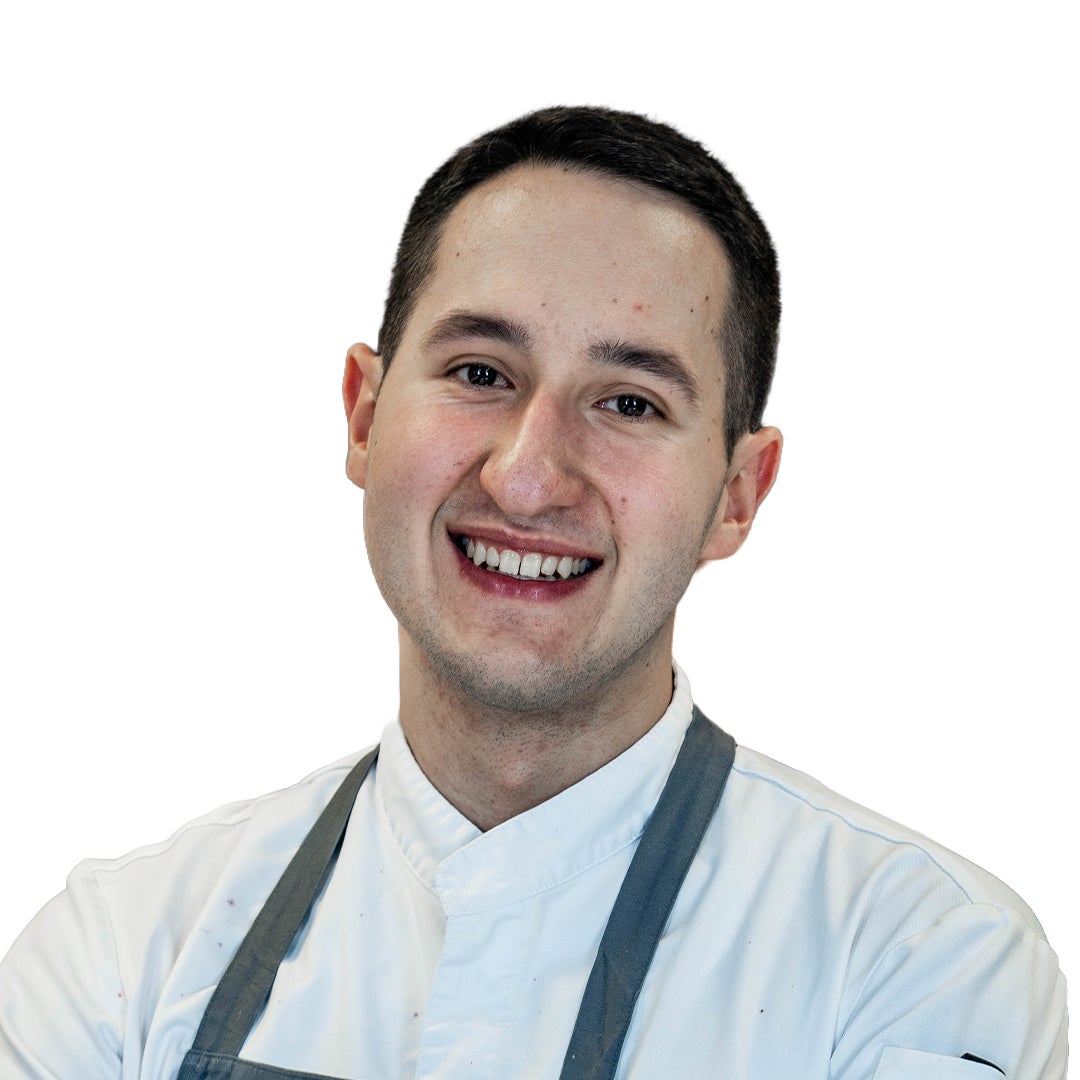

With this dish, I wanted to bring two parts of my life together. The wood pigeon comes from memories of my childhood landscape, while the Nordic Curry is my way of looking at Thai flavours through a Finnish lens.“The Migration of the Nordic Dove” is a personal dish for me. It is about where I come from, places that have shaped me, and how memories from my hometown, the Finnish archipelago and Thailand can meet on one plate.
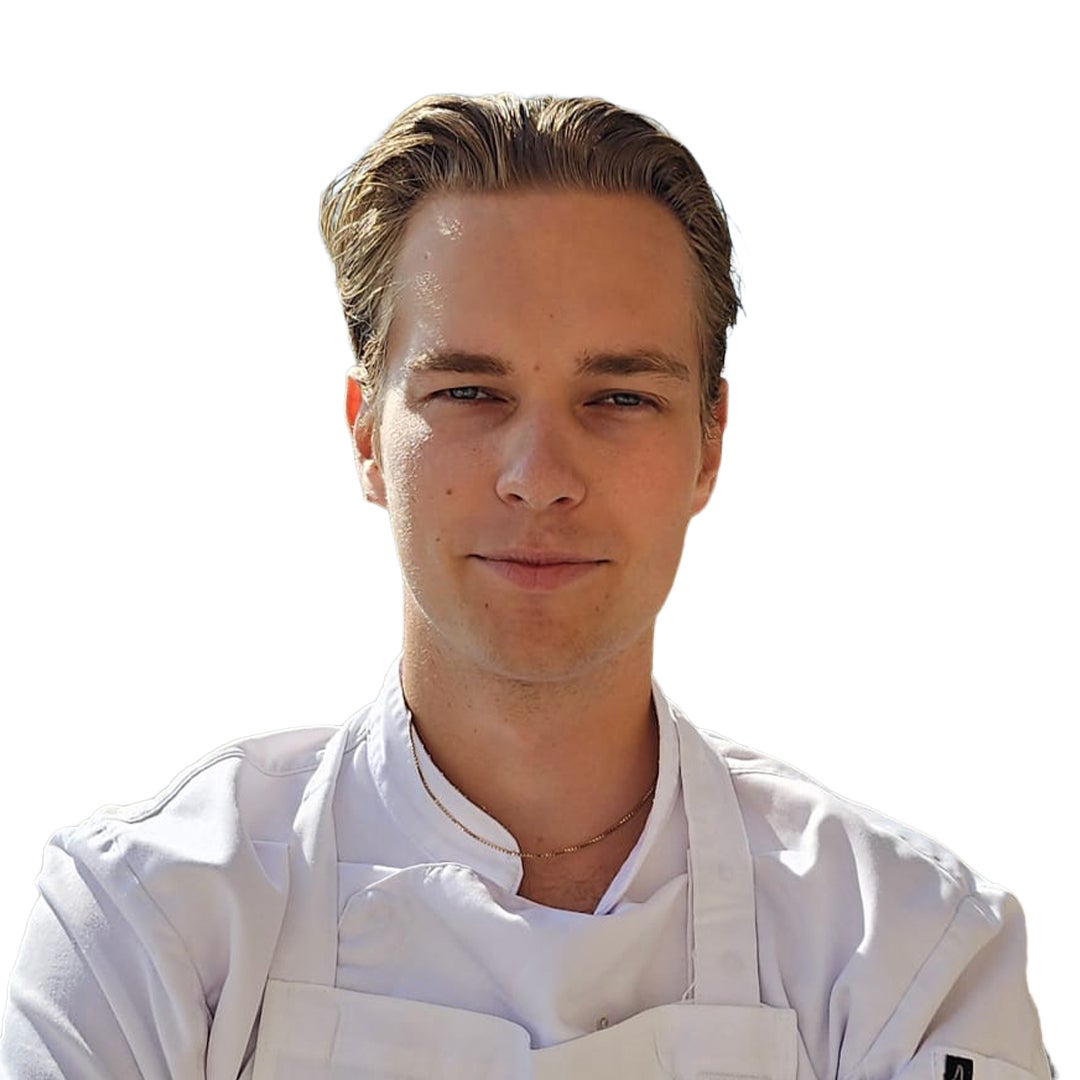

This dish represents how we can use different parts of one protein source and combine this with Estonian wine. I am also using lingonberry and moss from Estonia, it is hand picked from the forest near where i work every day.

Coming from an island, I strived to do products from there, representing the producers I grew up with. This dish combines products from different social rank (mackerel-langoustine). Some are my background, modest countryside, some are my present ‘palace cuisine’. Married together, proves that there is no rules. Everything can be good. There is no straightforward path — that embodies my life. It is also the style of cuisine I aim to go to: not having anything fixed or pre-decided.

Through this dish, I aim to evoke a sense of culinary heritage and connection to Sweden. The lamb symbolizes tradition and sustenance, reflecting the rich history of pastoral cultures. Each bite tells a story of resilience and harmony with nature and culinary craftsmanship. It embodies a cultural identity deeply rooted in reverence for quality ingredients and time-honored cooking techniques.

Denmark is the number one country of producing meat averaging 334 kg per person per year. However, as Denmark increasingly focuses on green energy and combating climate change, reducing the consumption of mass-produced meat becomes essential to lower the CO2 index. Through my dish I want to contribute to this change and adapt to a more sustainable future.


The idea behind the dish is to connect the Bulgarian and Nordic cuisine through common ingredients and procedures. The lamb is common for Bulgaria in Easter and this is written deep into the culture. The piece is either cooked on open fire or braised for long hours, and this is why I use both techniques to represent the original way of cooking lamb, from back in the days. The garnishes representing modern way salad, done by my grandmother, as well as flavorful, creamy fricassee served back home.

Nordic Sea is a dish that focuses on sustainable ingredients. This dish reflects my culinary journey and who I am as a chef today. Combining fishing and cooking is fantastic. Something I often did as a child. Many fish species are now threatened by overfishing and pollution. I focus on cod, blue mussels and seaweed. I use MSC-certified cod from the North Sea. Farmed blue mussels that contribute to a better sea environment and seaweed counteract the negative effects of climate change.

With this dish, I want to show that worldly flavors can be achieved with products from our own country or region, promoting sustainability and supporting local farmers and suppliers. This dish is entirely based on vegetables and fruits, and contains no animal products. By doing this, we challenge ourselves and demonstrate that the same flavors can be achieved without using animal ingredients.


Fish and seafood is close to my heart and this is why I chose this as main components. Blue shelled mussels filter our waters and removes nitrogen and phosphorus, which prevents eutrophication and algae concentrations. Mussels doesn’t need any backing or dung. Mine are sourced from the Swedish west coast, by Janne Bark's mussel farms outside Ljungskile. I’ve also chosen to work with Swedish cod, locally and sustainably sourced.

There are fewer fish in Lillebælt (the sea outside my restaurant) and this is partly due to the environmental problems we have created for ourselves.
Fortunately, we still have lobsters in the sea and we have an elderly fisherman who brings us the best lobsters. So this dish is my way of showing and helping to remember what Lillebælt means to us. The goal is to get everyone to respect the environment and the world's oceans again, otherwise we will destroy some of the most amazing things we have.

My culinary journey starts at the outbreak of the covid pandemic. Finding myself at a crossroad, I chose to go back to the roots and enroll in a French culinary program. There I discovered a passion for the arts. Meeting my mentor Chef Mathew Leong was my next career milestone. This dish represents my journey, as well as my identity. Cooking with high quality Norwegian produce, using french technics with an asian twist. I wish to show that all goals are reachable, even with a late start.ano

Due to the pandemic, everything closed and people with nowhere to go turned to forests and parks. This dish is created upon mixed feelings of all beautiful tastes and aromas that forest gives and all despair of trash, tires, cut off tries in forest I have seen by walking every day in forest...

Knowledge makes you respect the raw materials, if you know how we produce food we also learn to treat it with respect. Knowledge is power to respect different people, countries and finally the globe.

This dish focuses on solder fish which is one of the largest food sources for many fish species in the ocean. also that is hardly used in our gastronomic. more focused on Nordic ingredients and history with a mix of classic and modern cooking techniques.

This dish is inspired by our workplaces garden. Our own grown vegetables and salads combined with chefs knowledge creates Synergy. I would like to use this to entice you choose vegetarian options more often, I believe it’s beneficial for our health and also our environment.I I believe if we consume less meat it would be meaningful change for environment. Chosing locally produced food we decrease transport waist and reduce carbon footprint. Use local produce were possible. Less is more.

I would like to just honestly share my idea for this competition. I understand that not everyone that applies will participate however it does not mean I could try and share my journey to San Pellegrino, perhaps worldwide.
This dish represents my memories of my grandmother that I wanted to give my twist on. I applied lessons that I learned throughout my culinary journey that hopefully tells the story and what I am still willing to learn.

Chicken and buckwheat is one of the cheapest healthy meal options that is very common to cook among people in Estonia. However, the way it is cooked is usually very boring and not very pleasant to eat. With this dish, I tried to take these simple ingredients and create something new. I want to showcase that despite the importance of high quality ingredients, chefs are the ones who actually make the difference and create new dishes.

With more than 10 years experience in different countries it took me a second to realize and change mi mindset when it comes to cooking when I landed in Sweden a year ago, all green and good use of resources. My personal goal in my career is to reduce waste as much as possible, we are so many in this planet but most of us don't do enough to minimize our negative impact in nature. I believe we can do so much more and what´s better than start with what we eat in our restaurants?


We are a modern Spanish restaurant and this dish is my interpretation of the gamba al ajillo.
Traditionally, the prawns are often fried, but that is at the expense of the prawns. I think it's important that everything of a product is used. No unnecessary waste. In our version we use the whole shrimp.
This dish has everything I like. Crustaceans are my favorite product. Acids from the lemon and crispy from the kaitafi.

I'm from Lapland, where reindeer is a big part of the culture. With my signature dish, I want to show how diverse and wonderful meat reindeer is and combine it with international flavors. I lived in Lebanon for a year and wanted to bring flavors inspired by the Middle East alongside northern flavors. The dish is inspired by the mindscape of smoke over the swamp filled with berries, mixed with the scents of heather and angelica. At the end of the landscape stands a reindeer on the forest's edge.


I want to send the message that we really must make sure that the local food production survives in the future. In Norway, we are losing more and more of the producers because people don’t buy their vegetables/products. I want to show how amazing vegetables can be, just cooked the right way and that you can order a vegetarian dish in a restaurant, and still feel full. I’m doing this using some traditional cooking methods in a more modern and vegetarian way and only using Local products.

Over 800 million people around the world go to bed hungry each night. At the same time, one third of all the food that is produced for human consumption is wasted, and obesity is one of the western world’s most pressing health issues.
Hunger is one of modern civilization’s great paradoxes, since it is a problem that already has a solution. The cure for hunger is called food – and we already produce too much of it.

With this dish, I wanted to shine a light on modern Irish cooking, a combination of traditions and modern techniques. The Irish culinary heritage is firmly rooted in sustainable produce, an aspect I wanted to highlight when writing this recipe. Farming has always been at the heart of the Irish way of living, so it seemed befitting to base my dish on an animal that encompasses heritage and sustainability. Although perhaps a forgotten practice, dairy beef has always been part of our staple.

Less waste – more taste. My dish is based on an idea that I want to throw away less. Everything is utilized to its’ maximum: even herb stalks or stale bread. With a dash of creativity and practical knowledge we can lessen the burden of the never-ending food waste problem. My palate philosophy is built on natural impressions and simplicity. Therefore the balanced character of my dishes means there is no overshadowing of the natural flavours and beauty of the ingredients.

During my time spent at Faroe Islands I create this dish with one purpose, to make something Mexican inspired but allowing myself to do it only with local resources but still following the tradition of my culture, and way of cooking.
Adapting a classic street dish like “ceviche and tostadas” to a more defined and detailed idea with technique behind and a mix of ingredients from both cultures.
I think food on these days is about adapting, connecting and evolving like all humans.

I truly believe that the most important element is to have passion for food and cooking. Having passion for what you do will help to drive you to work harder every day. For me, I have a passion for good and clean cooking. When it comes to creating dishes, my culinary philosophy is that everything on the plate has to be “clean”, flavourful, and showcase the beauty of nature
To achieve that, I believe in using the best products ranging from sea, land, and forest to create innovative dishes.