The idea of the dish is from my hometown, Xinjiang, which is famous for its tasty lamb. The sheep live in the mountains where the sea-buckthorn and pleurotus grow. To bring the scenery of my hometown, I put them together in the plate. Besides, I also want to introduce the diet and cooking culture to more people in the world. We hardly waste any part of an animal as a respect of the nature, and cook each part separately to make the best use of it. Thrift and sustainability are notably important in this age, I wish I could arouse more attention on them.
Ding Ming Wu
China
This dish is a conversation of humble roots & cuisine’s inclusive power, as I’m from the “wrong side of the river” in rural Sh...
This dish is a conversation of humble roots & cuisine’s inclusive power, as I’m from the “wrong side of the river” in rural Shanghai & trained on the Rhône in Lyon. Vol-au-vent & Kousansi share a Chinese superior sauce brewed of Acqua Panna, topped with upcycled tuiles patterned from Song Dynasty art. I believe, in our divisive era, cuisine bridges cultures and nourishes innovation with understated depth & radical earnestness, respecting ingredients & welcoming all to drink from a shared well.
Min Zhou
China
There are many ways to cook chicken in Guangzhou, and as the saying goes: “It is not a feast if you don’t have chicken”. This dish...
There are many ways to cook chicken in Guangzhou, and as the saying goes: “It is not a feast if you don’t have chicken”. This dish is originally a Cantonese-style crispy roast chicken. Chicken dries out easily because of its low fat content, and traditional methods of roasting or frying at high temperature are not healthy enough, so I use modern low-temperature slow-cooking cooking methods to process traditionally marinated chicken. This resulting chicken is not only tender and juicy, but also nutritious and healthy.
The chicken is stuffed with sweet pea paste and shrimp paste. This is a technique called "stuffing" in Chinese cuisine. One or several ingredients are made into puree and filled with another ingredient. During the heating process, the flavors of various ingredients integrate yet retain their own characteristics. The sweetness of the sweet pea puree and the saltiness of the shrimp bring a fuller taste experience to the chicken. I reduce the use of condiments, and unique original flavor of the ingredients themselves become more memorable.
Xi Chuan Wang
China
This dish is created based on the idea of cultural fusion achieved through exploring and respect diverse national cultures. Genera...
This dish is created based on the idea of cultural fusion achieved through exploring and respect diverse national cultures. General Tso’s Chicken is the most successful American Chinese dish invented by Peng Chang-kuei. My personal experience mirrors chef Peng’s journey oppositely. I used my knowledge, Chinese culture, European cuisine technique re-define this American-Chinese classic to Chinese flavor, bring it back to home. Two parts of the dish telling a story about who is General Tso.
He-Sen Jason Liu
China
I have been training in the culinary arts since I was 14 and that set me on my career path. It allowed me to gain a thorough under...
I have been training in the culinary arts since I was 14 and that set me on my career path. It allowed me to gain a thorough understanding of Western gastronomy and culinary techniques. But I have never veered too far from what is familiar to me; Chinese cuisine is etched in my memory and I am mesmerized by it. Coupled with foreign elements, it has sparked whimsical surprises in my style of Chinese cuisine.
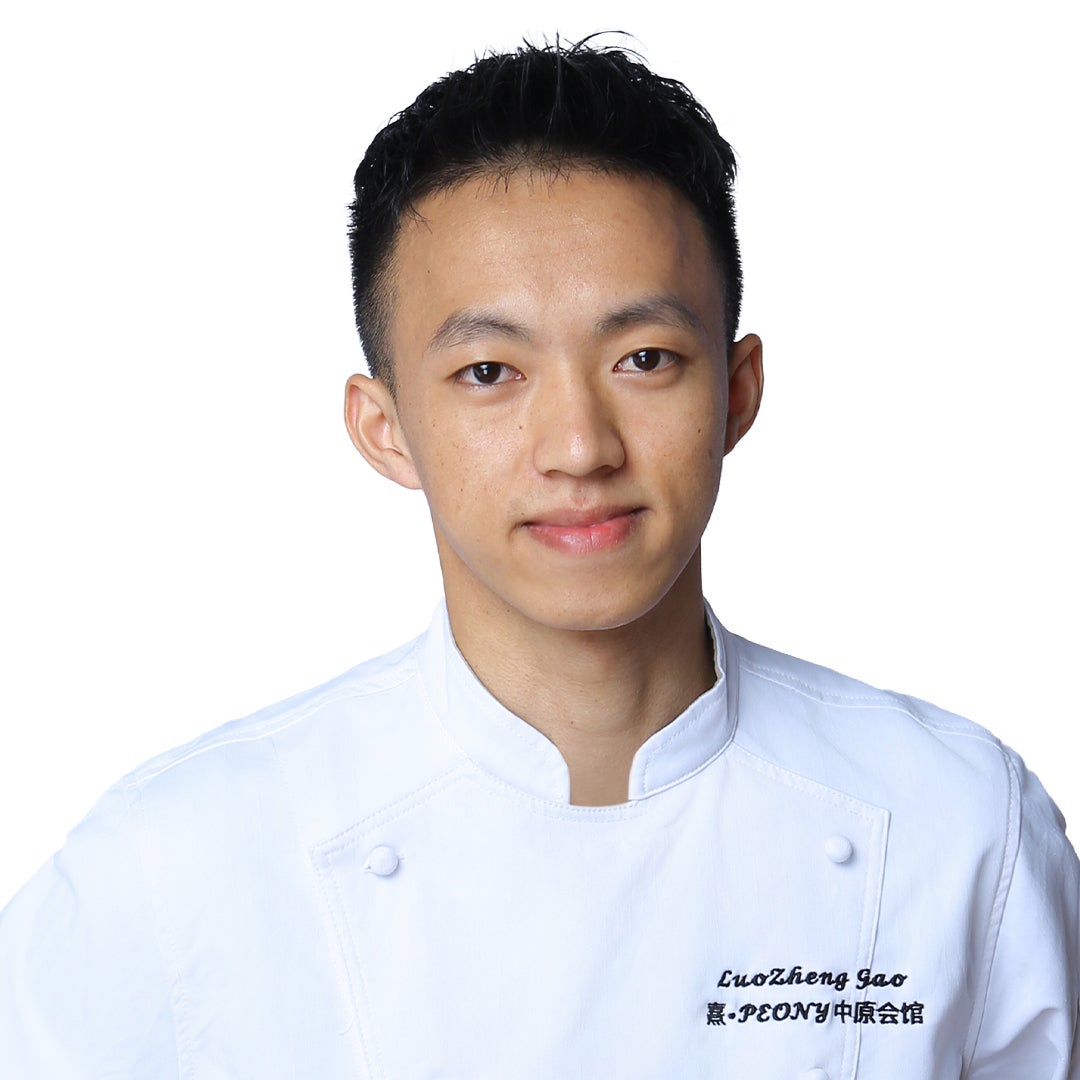
Zheng Gao Luo
China
The dish I present is Peony Yan Cai, a classic Henan specialty once served at state banquets. Following the traditional recipe, I ...
The dish I present is Peony Yan Cai, a classic Henan specialty once served at state banquets. Following the traditional recipe, I have enhanced it with premium sea cucumber while preserving its original essence. As a young chef from Yunnan mentored by a Henan chef, I see this dish as a tribute to tradition, mentorship and craftsmanship. It reflects my belief in respecting culinary heritage while thoughtfully adapting it for today's diners, bridging northern and southern Chinese cuisine.
Lili Zhong
China
I advocate, “to make full use of all things and sustainable ingredients."
I selected the specialty ingredient "Yanchi Tan Sheep...
I advocate, “to make full use of all things and sustainable ingredients."
I selected the specialty ingredient "Yanchi Tan Sheep" from Ningxia, China and local wild leek flowers. Using Chinese and Western fusion cuisine techniques to cook the lamb chops, lamb loin, lamb bones, internal organs and other parts combined with local flavours to form the flavour profile of the final dish. Puna series mineral water is used to cook the Yanchi Tan sheep, this is also the water that the sheep grew up drinking.
When making sauce and stock, I used the stock from making “lamb wrapped with lamb belly” combined with a sauce made from lamb bones. During cooking, kitchen utensils such as wide-mouth pots and pressure cooker are used to reduce the cooking time and to achieve the reduction of carbon emissions, and sustainability of ingredients. Geographical specialty product "Yanchi Tan Sheep" is selected with the intention to be the guardian of pure bloodlines, and to promote all over China and onward to the world.
De Wei Li
China
Through this dish, I want to bring the focus back to cooking itself. We live in a time where everything becomes an image very quic...
Through this dish, I want to bring the focus back to cooking itself. We live in a time where everything becomes an image very quickly, and food is often judged by how it looks before people even taste it. For me, a dish should first be delicious, warm and satisfying. The picture is important, but eating matters more. I have put my memories, my background, and the way I understand food into this dish. I hope it can remind young chefs to come back to flavour, technique, aroma and cooking.
Hong Fei Bi
China
Inspired by the first book of traditional Chinese medicine, "Huangdi Neijing," which states that food is food when eaten on an emp...
Inspired by the first book of traditional Chinese medicine, "Huangdi Neijing," which states that food is food when eaten on an empty stomach, but medicine when consumed by patients, I have chosen medicinal herbs such as Poria cocos, japonica rice, Gastrodia elata, and Phyllanthus emblica as the main ingredients, complemented by traditional handcrafted tea. This has led to the creation of a pure vegetarian dish, embodying the concept of food and medicine sharing the same origin.
Kai Liang Wang
China
Every cooking session brings back Jilin’s New Year dishes: guobaorou, braised eggplant and pork skin aspic. With Western, Japanese...
Every cooking session brings back Jilin’s New Year dishes: guobaorou, braised eggplant and pork skin aspic. With Western, Japanese and French skills, I reinvent these classics.I sous-vide pork loin coated with puffed quinoa, served with umeshu sauce and prickly-pear cold broth. Eggplant comes braised or charcoal-mashed, while pork aspic simmers in bone stock seasoned with soy, chilli and garlic oil.Hometown taste inspires my fusion innovation as a chef.
Wen Chao Deng
China
This dish is inspired by my journey across China, from Kashgar to Hami in Xinjiang China, where I gathered inspiration from what I...
This dish is inspired by my journey across China, from Kashgar to Hami in Xinjiang China, where I gathered inspiration from what I saw, heard, and experienced. It incorporates a variety of Xinjiang ingredients and cooking techniques, expressing my love for the region. I used the spice rub from Xinjiang's traditional whole roasted lamb to slow-cook the Xinjiang Altay lamb eye meat over charcoal, resulting in a flavorful dish.
Chang Jun Cai
China
This dish is my tribute to traditional Huaiyang cuisine, interpreted through the culinary language I know best. As a Western chef,...
This dish is my tribute to traditional Huaiyang cuisine, interpreted through the culinary language I know best. As a Western chef, I combine Chinese techniques and heritage with familiar Western methods, from consommé clarification to risotto emulsification and ballotine. Rather than reinventing tradition, I aim to create a respectful dialogue between cultures, showing that curiosity and craftsmanship can bring new vitality to classic flavours.