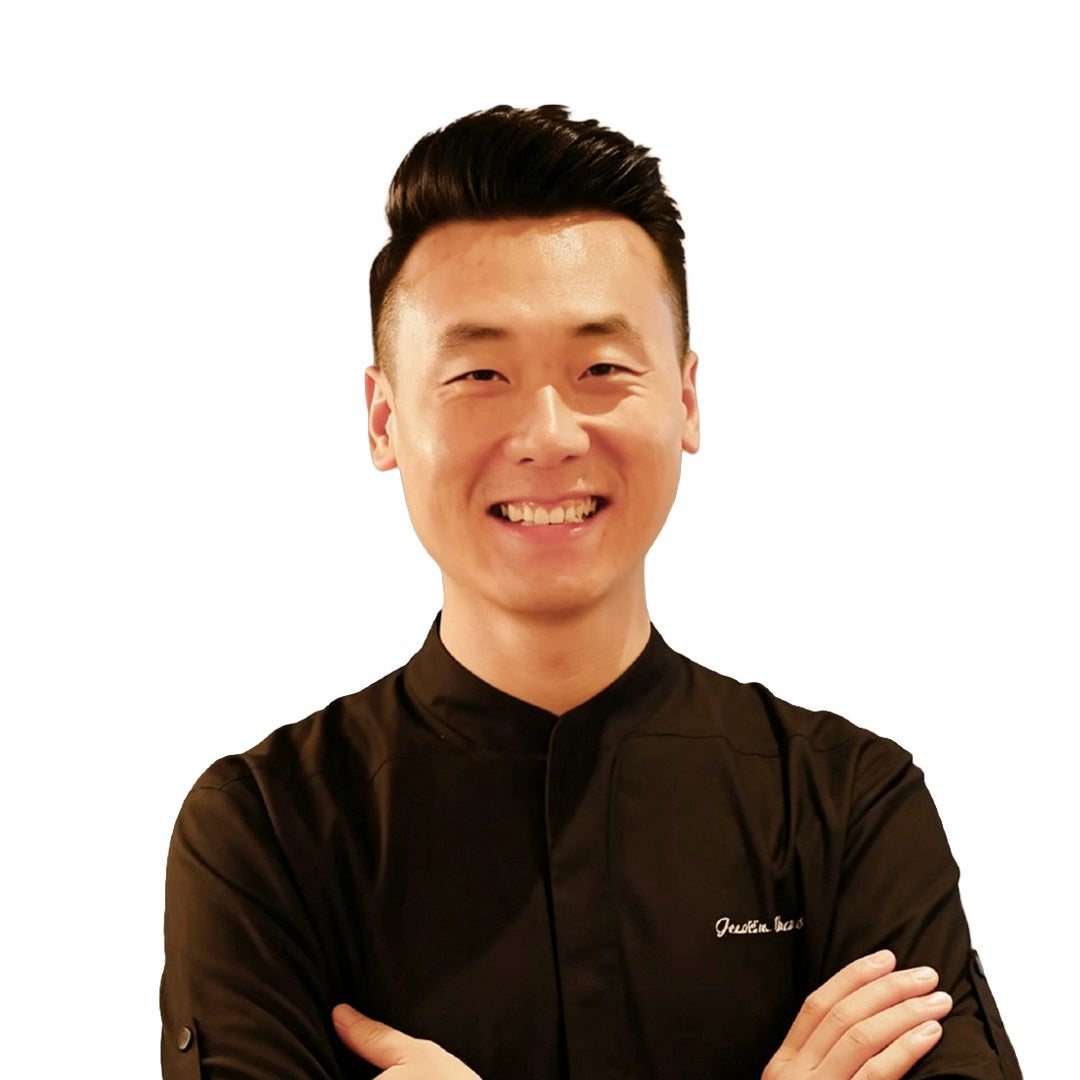
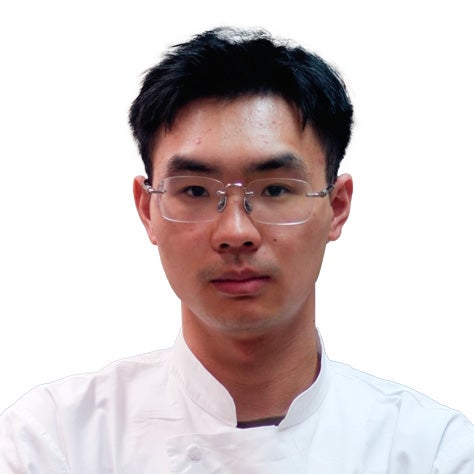
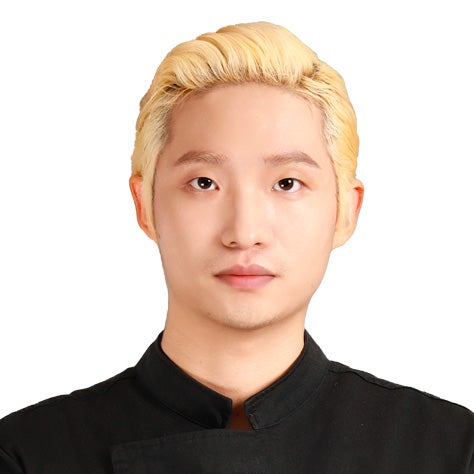
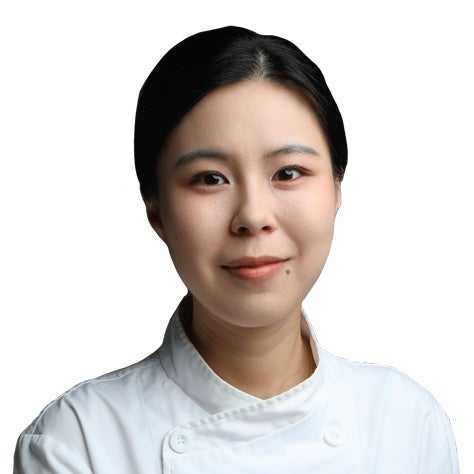
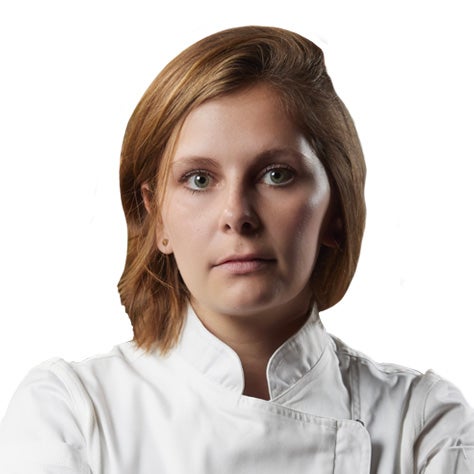
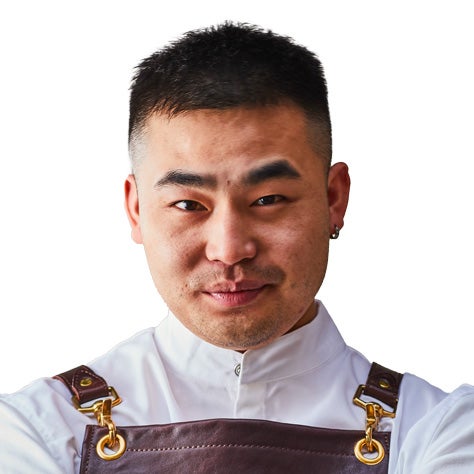
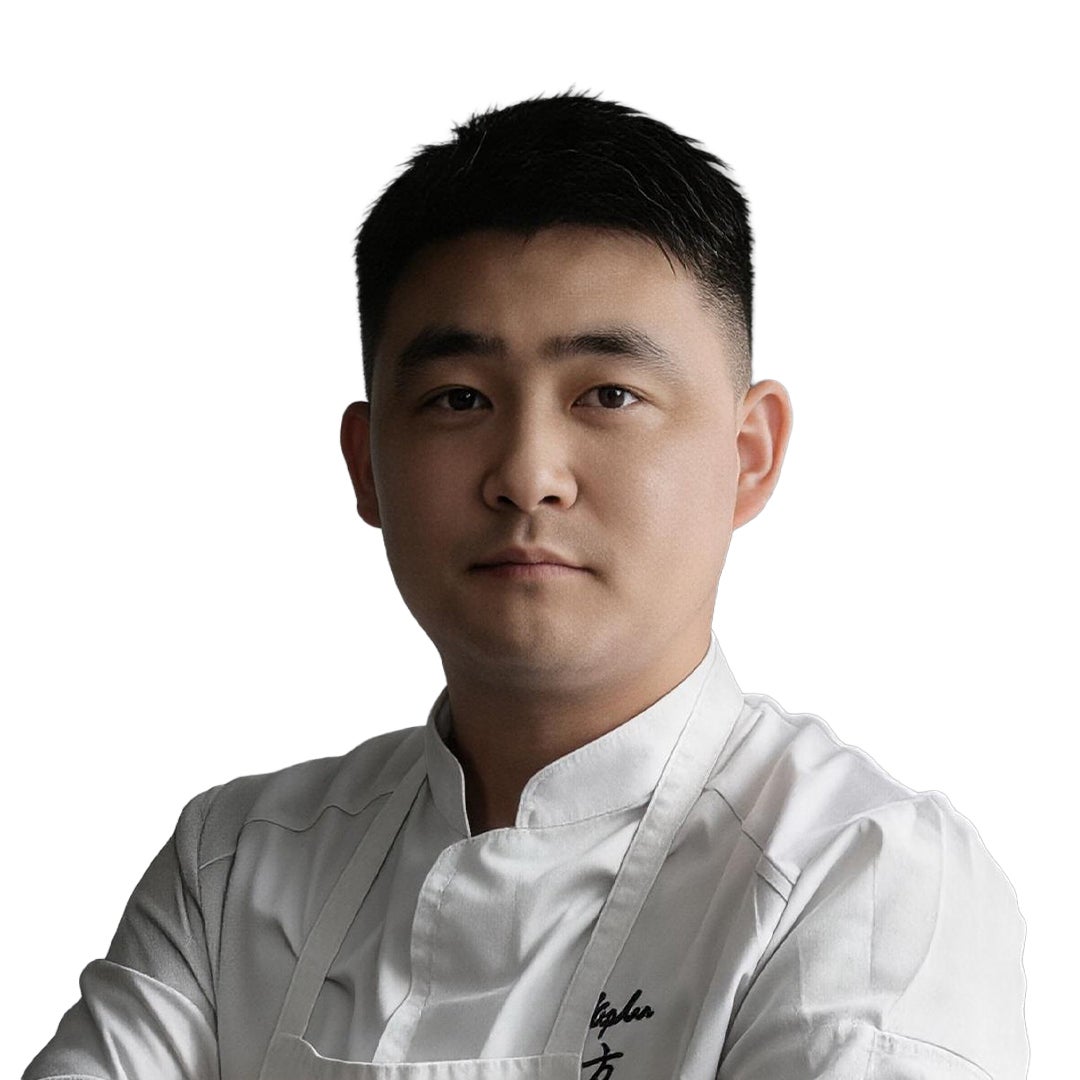
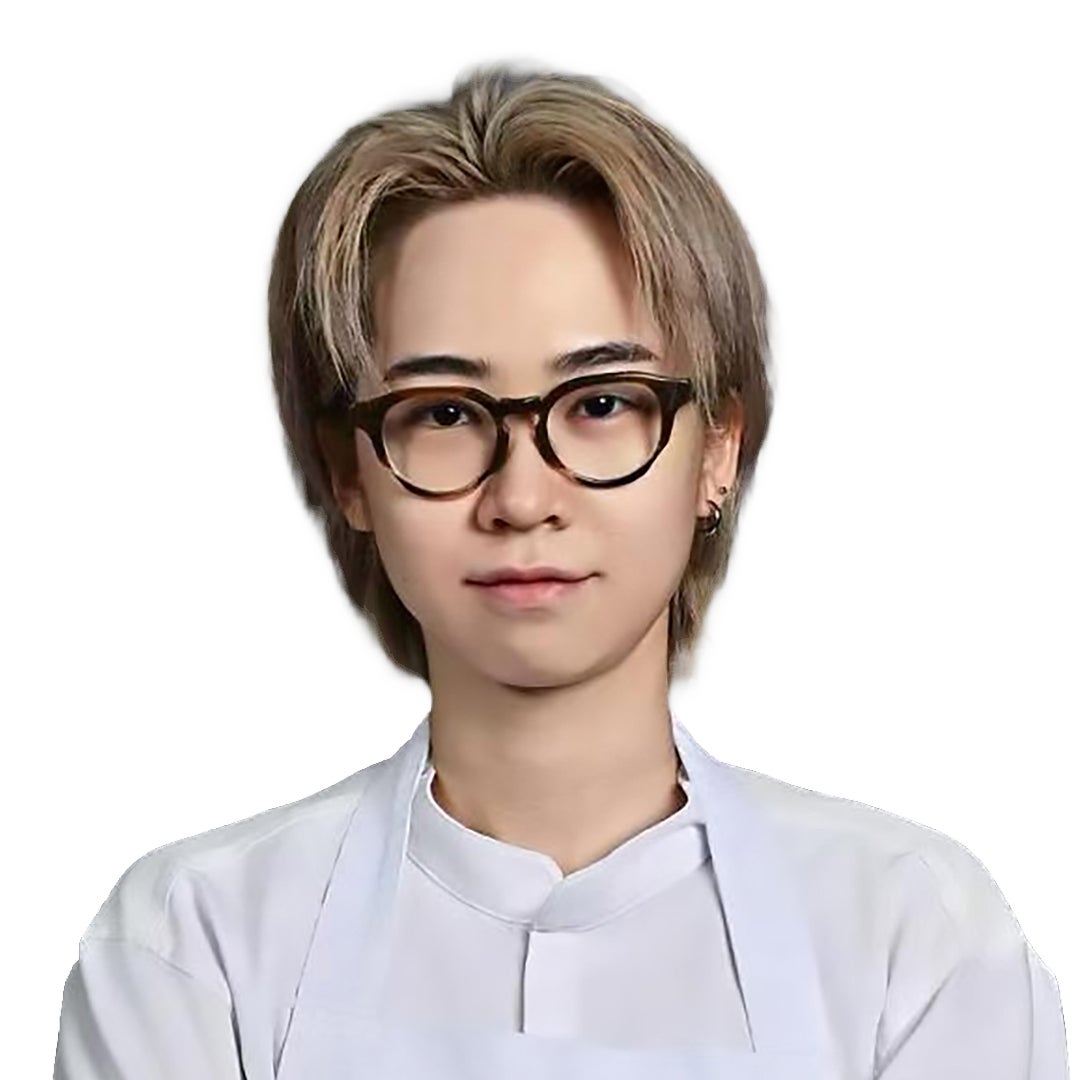
Word of umami in Chinese is combined with fish and lamb,so in China we have a famous dish called yuyangxian,using fish and lamb to make soup.To represent this dish and showing the skills i’ve learnt from different style of cuisine(especially French&Italian), i made this dish in 3parts by using local lamb and golden loofah of my hometown Chongming island.Presentation comes from the memory of childhood that my dad bring me to catch fishes in river and have picnic near the place sheeps live.
Huan Qin
China
The dish presented by Alchemist restaurant, calling for a reduction in ocean plastic, has inspired me and made me realize that oce...
The dish presented by Alchemist restaurant, calling for a reduction in ocean plastic, has inspired me and made me realize that ocean pollution is not far from anyone. I live in Zhuhai, Guangdong Province, a coastal city with abundant seafood resources that is also affected by pollution. Therefore, I hope to use my dishes to raise awareness and urge people to protect the ocean.
Wang Ming Zhao
China
This dish explores the dialogue between Eastern and Western dairy cultures through the concept of "Oriental Dairy Coagulation." Wh...
This dish explores the dialogue between Eastern and Western dairy cultures through the concept of "Oriental Dairy Coagulation." While the West relies on animal milk, Eastern cuisine transforms soybeans into soy milk, tofu, dried bean curd and soy sauce. Through live soybean processing and the use of soybean residue, I showcase this culinary heritage while highlighting sustainability, paying tribute to one of the pillars of Eastern cuisine.
Jun Feng Jiang
China
I once read an interview stating that food waste is a fatal flaw in fine dining restaurants. Many ingredients, from purchase to pl...
I once read an interview stating that food waste is a fatal flaw in fine dining restaurants. Many ingredients, from purchase to plating, end up being only 50%-70% of their original quantity, with an average of 30% of ingredients being wasted. However, sustainable development is a social responsibility and obligation that we, as the new generation of young chefs, must undertake. At this moment, I utilize various cooking techniques to fully utilize ingredients and minimize waste, aiming to convey my thoughts on sustainable development as a young chef.
Junhao Hu
China
This is a modern culinary expression that combines local Sichuan ingredients with traditional French cooking techniques. Through t...
This is a modern culinary expression that combines local Sichuan ingredients with traditional French cooking techniques. Through this dish, it showcases the exchange and fusion of different regions and cultures, highlighting the harmony and balance of Sichuan's natural environment. Fresh seasonal bamboo shoots, sun-drenched Daliangshan yellow potatoes, and the unique flavor of wood ginger are used, aiming to express the skills and aesthetics of modern cooking through traditional French methods.
Jin Wang
China
As a native of Nanjing, I have always held a belief that "no duck can leave Nanjing alive." From a young age, I may have had a cer...
As a native of Nanjing, I have always held a belief that "no duck can leave Nanjing alive." From a young age, I may have had a certain obsession with eating duck. For this competition, the dish is based on Nanjing Saltwater Duck, using the Fujian Egret Duck, no part of the duck is wasted; Food is the foundation of life, and since ancient times, the path of cooking has always been about inheritance. Like an old tree with intertwined roots and lush branches, only by inheriting and being brave enough to innovate can new buds continue to sprout. This is akin to the theme "Old Tree, New Sprouts."
Yi Zhang
China
I want to memorize my first trip to Guangxi. A mountainous region with rich cultural resources.Bamboo there is a important materie...
I want to memorize my first trip to Guangxi. A mountainous region with rich cultural resources.Bamboo there is a important materiel.I went to several villages deep in mountains.The weather makes moss grows everywhere.People there are poor and still using self-made charcoals for cooking and stay warm, so the smell of smoke hung in the air.But what touched me is the kindness of them.
This is a vegetarian dish ,the flavor of my dish based on a famous noodle in Guangxi, name is Old Friend noodle, and I use some fermented ingredients which are also common in Guangxi cuisine.
Zi Hao Lu
China
In Chinese culture, there is an old saying, "Eat what is in season," which means that the right time creates flavors, and if misse...
In Chinese culture, there is an old saying, "Eat what is in season," which means that the right time creates flavors, and if missed, one must wait patiently. Watching the ingredients in the liquid or the proliferation of fungi during the making of rice koji, I have been struck by the unique flavors these processes bring to food, reminding me of the preciousness of life. As a chef, I believe it is my duty to cherish this gift of life brought by time, allowing it to continue in a different form. I believe that this gift should not be used solely for profit, but should be shared with everyone, allowing them to experience its charm.
Shixin Luo
China
China is a country with vast territory and abundant resources, and each region has its own special ingredients. This dish uses the...
China is a country with vast territory and abundant resources, and each region has its own special ingredients. This dish uses the loin of Tan sheep originally from Ningxia, which like to lick salt in the Gobi Desert.
Pickled with Sichuan pepper and spices for oil seal, with yunnan spring and summer wild bacteria made of wild cheese, fermented corn is more delicious, sweet and delicious, showing the style of Chinese wilderness.
The whole dish is like a tan sheep from the Gobi Desert, placed in the Yunnan mountains rich in wild bacteria. Corn plays the role of pastoral scarecrow, paired with western dishes and mints and herbs associated with Yunnan's native eatery habits.
Wei Jie Yao
China
This dish represents my fond memories and deep affection for the Jiangnan region.The fresh bamboo shoots on the mountains in sprin...
This dish represents my fond memories and deep affection for the Jiangnan region.The fresh bamboo shoots on the mountains in spring, lotus leaves covers the ponds in summer, golden fields in autumn, and the aroma of cured meats in every courtyard in winter. These are my cherished memories, and I want to share this warmth and beauty through my food.
Binshu Zhao
China
Nature is almighty, and ecological systems require balance, this symbiosis the only way to survive, so I had the inspiration to us...
Nature is almighty, and ecological systems require balance, this symbiosis the only way to survive, so I had the inspiration to use “Coexistence” as my theme.
This inspiration stemmed from the traditional Chinese character “Xian” (meaning freshness, which is made up of the Chinese character for “fish” and the Chinese character for “lamb” ).
I use a commonly found but not ordinary big head carp fish head from the freezing regions of the Northeast. Due to the cold weather, the big head carp is fatty and has a wonderful texture. The fish head is the best part and rich in collagen, it is the soul of the produce. This I combined with the delicacy of the grasslands, the tender lamb, and the traditional fried snack “You Dun Zi”; onion crisp, caviar, asparagus lettuce, and powdered dill adds texture and flavor.
Where it matters, ingredients that reflect their geographical and natural habitat are used and through my understanding, creativity, innovation and using each ingredients to its fullest.
Vitoria De Cia Caixeta
China
I express the fusion between two cultures, Chinese and Italian. The dish is composed of childhood memories where every Sunday as a...
I express the fusion between two cultures, Chinese and Italian. The dish is composed of childhood memories where every Sunday as a child I cooked with my grandmother "Spaguetti pomodoro", I grew up with the taste of this food and I tell this story with Chinese elements, peppers from the Sichuan region, which I transfer to the tomato sauce. I replace the "grano paste" with bamboo, from southern China. I follow my dish with crostini in it there is osmantus that reminds me of the Chinese spring.
Yunze Zheng
China
The inspiration for this dish came from my hometown: Ningbo, Zhejiang. There is a dish in Ningbo, Zhejiang Province called Stir-Fr...
The inspiration for this dish came from my hometown: Ningbo, Zhejiang. There is a dish in Ningbo, Zhejiang Province called Stir-Fried Rice Cake and White Crab. The white rice cake on the plate is the original slice of rice cake with ginger oil brushed on it. Under the white rice cake are crab meat, chive, tarragon, crab paste egg meringue, and white crab bisque. The snack in the upper left corner is another dish inspired by hometown: bean curd skin-wrapped yellow croaker. I replaced the yellow croaker with crab legs and sprinkled the tomato puree powder from the Bisque making process. This dish is from my hometown, but it is presented in a way that is not traditional. I believe this presentation method can be accepted by more people.
Ya Min Liu
China
For me, the meat of the turbot fish is tender and not fishy, and it often appears on every household's dining table. The common co...
For me, the meat of the turbot fish is tender and not fishy, and it often appears on every household's dining table. The common cooking methods include steaming, braising, pan-frying, and more. Although it is a very common fish, I want to try to create a unique experience based on my own understanding. Furthermore, it seems that the concept of "numbing and spicy" is not widely known internationally. I hope to introduce the concept and let more people understand the charm of Chinese cuisine and the unique flavors it offers
Kang Fang
China
I believe that the whole point of journeying far away is to return home with a deeper understanding of flavors. Like a pigeon trav...
I believe that the whole point of journeying far away is to return home with a deeper understanding of flavors. Like a pigeon travelling across mountains and seas, I left Anhui to pursue my culinary dream. No matter how far I wander, the warmth of family and the flavors of my hometown remain in my heart. Though I chase light thousands of miles away, my heart always finds its way home.
Fengwei Xie
China
This dish stemmed from my memory of my hometown. It started with chicken from Hetian Town and that relates to local farms and the ...
This dish stemmed from my memory of my hometown. It started with chicken from Hetian Town and that relates to local farms and the whole ecological system. From there, it casts a light onto the Chinese farming and rural society culture.
Poultry is an important element in the dining culture for this city tucked away in the mountains. These Hetian chickens have a wild temperament and were used for imperial chicken fights in the ancient times. The farmers live in the mountains and the chickens roam around freely in the pristine environment feeding on wheat and rice grown on the farm. From my memory, these chickens are capable enough to scale trees and even rooftops.
Xiao Yue Yang
China
This dish reflects my understanding of Lingnan culinary culture, where chicken symbolizes reunion, hospitality and inheritance. By...
This dish reflects my understanding of Lingnan culinary culture, where chicken symbolizes reunion, hospitality and inheritance. By pairing Qingyuan chicken with seasonal ingredients and reinterpreting classic preparations, I aim to tell a story rooted in Guangdong’s traditions, landscapes and sense of home. I believe traditional flavors can be reinterpreted and passed on in a contemporary way. To me, this is not merely a chicken dish, but a memory and emotion that belong to Lingnan.
Jin Wang
China
Nature selflessly sustains all things. Cuisine should also be all encompassing – discover China’s local sea habitat and combine di...
Nature selflessly sustains all things. Cuisine should also be all encompassing – discover China’s local sea habitat and combine different techniques. To realize the borderless-ness and all-encompass-ness of cuisine. Just as the sea is vast and embraces all streams. Three pillars as one. With the ocean, time and the sun as the axis, extending their reach.
Begin with a thousand-layer potato prawn dumpling amuse bouche inspired by the traditional renowned dish Longjing Shrimp. For this dish, Zhoushan prawn, known for its quality comparable to Spanish Carabinero prawn, is paired with white konbu flavoured konbucha and fried moss, and is, unintentionally, a representation of local Chinese culture of enjoying morning tea.